
The Future of Targeted Drug Delivery
ANGIE — magnetic nanorobots capable of navigating the body's vascular system to deliver therapeutic agents precisely where no other instrument can reach.
Externally guided navigation through complex vascular pathways using electromagnetic fields.
Localised therapeutic release directly at the target site — not systemic administration.
Lower overall dosages and reduced systemic exposure with fewer unwanted side effects.
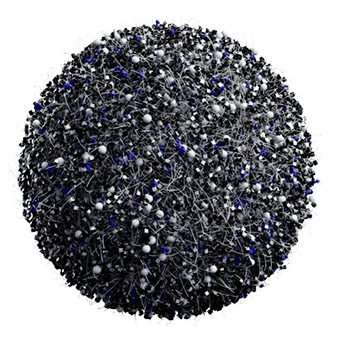
Precision in diagnosis has advanced rapidly. Precision in treatment remains significantly more difficult.
Many treatments still rely on systemic administration, in which therapeutic agents circulate throughout the body before reaching the intended target site. While necessary in many clinical contexts, this approach can increase systemic exposure and contribute to unwanted side effects.
A comparison of targeted platform delivery versus traditional systemic administration.
The Angie Project
Externally guided, localised, minimally invasive.
Traditional Delivery
Systemic circulation, passive distribution.
Encapsulation of the therapeutic agent
To overcome the limitations of systemic drug administration, the platform encapsulates a therapeutic agent within a miniature delivery system designed for precise targeting.
Introduction into the body
The drug-loaded platform is introduced into the body using minimally invasive techniques, positioning it for controlled navigation toward the treatment site.
Magnetic guidance through complex vasculature
Once deployed, the platform uses external electromagnetic fields to guide the delivery system through intricate vascular pathways, enabling controlled steering toward hard-to-access regions inside the body.
Localised release at the target site
Upon reaching the intended location, the platform is designed to dissolve and release the therapeutic agent directly where it is needed, supporting localised treatment and more precise therapeutic delivery.
Precision therapy with reduced systemic exposure
By concentrating the therapeutic agent at the target site, the platform aims to support lower overall dosages, minimise systemic exposure, and reduce unwanted side effects.
Key advantages of the platform
Because advanced targeted drug-delivery systems can sometimes be misunderstood or subject to speculative interpretations, the Angie Project places a strong emphasis on control, monitoring, and scientific transparency.
Externally guided
Guided throughout the navigation process — not autonomous.
Imaging-supported
Movement is monitored using imaging-supported systems.
Safety-first
Controlled, localised delivery under medically relevant conditions.
Reduced exposure
Lower dosages and fewer unwanted side effects.

How the platform operates
The platform combines externally guided navigation with controlled and localised therapeutic release. Rather than relying on passive distribution, the system is designed to support more precise therapeutic delivery through externally controlled movement and targeted localisation.
- Encapsulation of the agent in a miniature delivery system for precise targeting.
- Minimally invasive introduction into the body.
- Navigation via external electromagnetic fields through complex vasculature.
- Dissolution and localised release directly at the target site.

Precision medicine at a smaller scale
Designed to move through complex biological environments while maintaining controlled navigation and localised therapeutic release.